Showing posts with label recipes. Show all posts

Thursday, July 26, 2012

Three Tuna Recipes


Tuna is one of the easiest fish to start with in the kitchen, especially if you find sashimi grade tuna. Check with your fishmonger. At some stores, like some Whole Foods in and around New York City, the tuna is kept in a super-freezer. It's easy to defrost at home. I hope to post on it in the future.

This first recipe is simply sashimi grade tuna that is rough chopped and quickly seasoned with soy sauce and shichimi (seven spice). But feel free to use whatever you want like sesame oil, some Korean kochujan, etc. We marinate the fish for about five minutes and then serve it over rice.


This zuke couldn't be easier. Thinly slice the sashimi grade tuna, put in a bowl with

2 parts soy sauce
1 part mirin
1 part sake

and marinate overnight in a refrigerator. Serve over a bowl over hot rice.


This tuna tataki dish is always satisfying. There is something about the texture of the cooked exterior and the raw interior that makes this an appealing dish. Also, the nuttiness of the sesame seeds is a nice partner to the meaty maguro. Simply roll a sashimi grade tuna steak in sesame seeds, white or black. Then heat up a saute pan, ideally a non-stick one, add oil, and sear all sides. Let it rest before slicing. Serve with soy sauce and wasabi.

One dishes like this are mastered it becomes easier to branch out to cooking with other seafood.

Monday, July 2, 2012

Kiriboshi Daikon and Pork


Some of my favorite Japanese cookbooks are authored by chef Hiromitsu Nozaki of Waketokuyama. He was on NHK's Asaichi, a morning variety program, with some great ideas. This one adds some thinly slicked pork belly to the kiriboshi daikon. What is brilliant is about this is that the pork is so flavorful that there is no need to add dashi.

100 grams kiriboshi daikon
50 grams thinly sliced pork belly
25 grams julienned carrots
1/2 Tablespoon vegetable oil
green part of a leek

Simmering Liquid
75 ml water
15 ml soy sauce
15 ml mirin
1/2 Tablespoon sugar

Reconstitute the kiriboshi daikon in water. Cut into bite-size pieces. Blanch in hot water for one minute and drain in a strainer.

Cut the pork belly into 2 cm slices. Blanch in hot water.

Julienne the carrots.

In a pot saute the kiriboshi daikon in the vegetable oil. Add the Simmering Liquid and the leek (which adds some sweetness to the dish). Simmer until the broth reduces to half. Remove the leek. Add the pork and carrots. Simmer until most of the liquid has dissipated. Allow to cool in the hot pan. (This is when most of the flavors soak into the vegetables.)


Monday, June 18, 2012

Kiriboshi Daikon Furikake


Kiriboshi daikon 切り干し大根  is something I always have in our pantry. Dried strips of daikon can be quickly reconstituted in water and is a simple way to add another vegetable dish to the table. 

However, I get into the routine of always making the same dish time after time. Kiriboshi daikon simmered with some carrots and abura-age (deep-fried tofu) in a sweet soy broth. Sometimes I'll switch out the abura-age for some Satsuma-age (deep-fried fish cakes). Good, but not an exciting change from our old ways.

Today I had just a little bit of kiriboshi daikon left in a packet. I quickly rehydrated it in water, squeezed it of excess water, and cut it into small pieces. In a pan I sauteed it with some sesame oil, toasted sesame seeds, and salt. It was a nice change-up from the typical nimono (simmered dish) we have. I had it as furikake over rice, but will try it next time over a salad.

Monday, May 21, 2012

Bacon Wrapped Enoki Mushrooms


Who doesn't love bacon? While it may not be a traditional Japanese ingredient, bacon is used from time to time in the Japanese kitchen. This enoki bacon maki is a popular okazu or side dish. Best of all, it is good whether hot or at room temperature. These usually get eaten up quickly, so if I want to use some for a bento it's best to save a few.


I can't be bothered with toothpicks to secure them shut. So instead I use longer slices of bacon and wrap up the bunches of enoki. Just saute until the bacon is cooked and you have a nice addition to any dinner. 

Monday, May 30, 2011

Sesame and Soy Dressing for Cold Noodles 冷やし中華だれ

This simple dressing from NHK's cooking site is a version that we use in our house for cold noodles, either somen or soba.

150 ml soy sauce
90 ml rice wine vinegar
5 Tablespoons sugar
1 Tablespoon sesame oil

Mix the soy sauce, vinegar and sugar in a bowl until the sugar dissolves. Add the sesame oil. Will keep for about a week in the fridge.

Saturday, May 28, 2011

Salmon and Potato Hash Browns


We often have salted salmon filets in our fridge on hand for Japanese breakfasts. One morning I was craving hash browns but also wanted to use the salmon. I cooked the salmon first and then broke it apart into smaller pieces. I then made the hash browns as normal, julienned potatoes in a saute pan with extra virgin olive oil. While I usually add salt and pepper I avoided the salt this time as the salmon was quite salty. After the potatoes were cooked through and I added the salmon and then seasoned with pepper. A satisfying way to start the day.

Wednesday, May 25, 2011

Natto & Pork Sake Bites


We love natto and can't get enough of it. Our favorite way of eating it is simply over a bowl of hot rice. Other options include serving it with some tuna sashimi or grated yamaimo.

I had this particular dish out at a restaurant, I think it might have been En Japanese Brasserie in New York City's West Village. I recreated it at home and loved the results.

2 packs natto
1/4 lb. ground pork
1 Tbsp. miso
1 tsp. kochujan
1 tsp. sugar
1 tsp. sesame oil

Saute the ground pork in a little bit of oil until cooked through. Add the natto, miso, kochujan, sugar and sesame oil. Cook until combined. Season with salt and pepper to taste. Also adjust other seasonings as you like. Serve with lettuce.

Perfect with sake or shochu.

Sunday, May 22, 2011

Fried Fish Japanese Style (Buri no Tatsuta Age) 魚の立田揚げ


I am addicted to chicken tatsuta age, Japanese-style fried chicken and have been making it at home for years. The same process can be used with seafood, in particular meaty or fatty fish like buri, katsuo, or maguro.

Cut the fish into bite size pieces.
In a ziplock bag marinate the fish with:
1 clove garlic, minced
1 inch chunk ginger, grated and squeezed for its juice (discard the pulp after squeezing)
3 Tbsp. soy sauce
1 Tbsp. mirin
1 Tbsp. sake

Marinate for 30 minutes or one hour.

Heat some oil for frying.

Before frying dredge the fish in some katakuriko.

Fry until cooked through.

Friday, May 13, 2011

Kabocha Soup かぼちゃスープ


For a dinner party recently I served this kabocha soup cold and it was a huge hit. It really is so easy, can be made in advance, and will keep for a few days in the fridge so worth making a big batch. It is good hot or cold, and even better when a bit of heavy cream is poured in at the last minute before serving.

Cut kabocha into small pieces, be sure to remove the green rind and all seeds.
Steam in a steamer until tender.
Smash with a fork or a masher.
Return smashed kabocha to a soup pan and add chicken stock until desired consistency.
Season with salt as needed.
Allow to cool in the fridge or serve immediately.

Saturday, April 30, 2011

Sake Steamed Fish 酒蒸し魚


Being married to a fishmonger we often have seafood for dinner. Our preferred way of eating fresh seafood is sashimi, simply sliced and served with some soy sauce and wasabi, or ponzu and some yuzu kosho. However, we don't always have the luxury of having sushi-quality seafood.

A quick and easy recipe that is not only delicious but also healthful is steaming fish in sake. I take a small plate and on it put a piece of fish, shiitake mushroom, carrots, some greens (bok choy or spinach), sliced ginger, and a piece of tofu. Drizzle the plate with some Japanese sake and some salt. Put in the steamer and cook until the fish is cooked through, which will vary depending on the thickness of the fish.

Friday, April 29, 2011

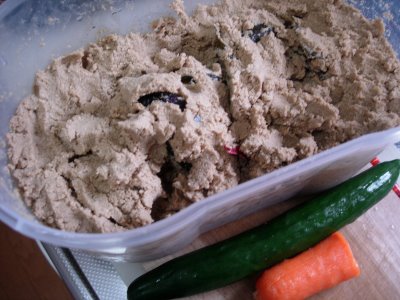
Nukazuke Pickles Recipe


Last year I had the privilege of interviewing chef MIchael Anthony of Gramercy Tavern in New York City for Food Arts magazine. He had spent some time in Kyoto training with some of the top chefs there and learned how to make nukazuke pickles. There is a recipe for nukazuke pickles in Food Arts magazine (I believe the September 2010 issue).

At Gramercy Tavern chef Michael Anthony serves up a variety of pickles, including nukazuke, or vegetables pickled in a fermenting mash of rice bran. Pickling in Japan is a great vehicle for vegetable scraps or parts of the vegetable that in most kitchen would immediately be discarded, such as the green leaves of a daikon.

* correction - in an earlier post I wrote that this recipe is from chef Michael Anthony. This is actually a basic nukazuke recipe from Japan. Sorry for any confusion or misunderstandings. Yukari

Nuka pickles are relatively easy to make and result in a unique pungent earthiness. The key to a successful nuka pot is that the mash needs to be mixed up daily. If left ignored it will begin to mold.

Basic Nukazuke
3 kg. nuka rice bran
500 grams salt
9 - 10 cups water or beer
5 dried red chili peppers (aka togarashi)
1 piece kombu
150 grams of vegetable scraps (cabbage skins, daikon greens, or any watery leaf)

Combine the ingredients into a large pot. The mash should feel like the soft spot of your earlobe, so adjust the amount of liquid accordingly. Keep the lidded pot in a cool place and stir daily for four days. On the fourth day remove the vegetable scraps, leaving the kombu in the pot. Thoroughly wash any vegetable you will pickle and put into the pot. Note that the vegetables do not need to be peeled. The amount of time for the vegetables to pickle will vary from pot to pot. Two to three days is the average for most vegetables. Almost any vegetable can be put into the nuka pot. When serving the pickles thoroughly rinse the bran off with cold water and cut into bite size pieces.

Popular vegetables for the nuka pot are Japanese cucumbers, daikon, carrots, Japanese radishes, and greens such as the leaves from the daikon. Anthony has found great success with sunchokes, parsnips, and watermelon radish. These are a nice contrast for his chicken liver mousse.

Nuka for pickling is available at Japanese supermarkets. Anthony procures his from Barry Farm in Wapakoneta, Ohio.

Once your pot is active there are many different adjustments that can be made. The capsaicin in dried red chili peppers will help to prevent the oxidization of the oil in the nuka. To increase umami add a piece of kombu, katsuobushi (dried bonito flakes), or dried, powdered shiitake. Calcium rich eggshells will neutralize the acidity. Note that the eggshells should be sterilized carefully in boiling water and dried before using. To add aromatic notes try sansho berries, garlic, ginger, or the skins of mikan (mandarin). Yaki myoban (alum) will help prevent the discoloration of eggplants. Any of these additives can be left in the pot as over time they will disintegrate.

Eventually the pot will have an excess of liquid, released from the vegetables. To rid the pot of the liquid create small pockets and insert a small sake cup. The liquid will collect in the cups.


Related links:
http://www.foodarts.com/
http://www.gramercytavern.com/

Thursday, April 28, 2011

Sansai - Tara no me (Angelica buds) Tempura たらの芽天ぷら


Who doesn't love tempura? If done well you have a crispy lacy batter covering vegetables or seafood. While it is traditionally served with a soy based dipping sauce I prefer it served with some salt to dip the tempura into, so that it retains its crispy texture.

Doing tempura well is very hard. It was the only food I refused to cook when I was a private chef as it just could not be done well. However, once a year I will make an exception to the rule. Even though I can not do tempura justice I just can not resist to have sansai (spring mountain vegetables) tempura.

We had tara no me tempura for dinner the other night. While you can see my batter is not thin and lacy, and this dish is of course much better to have in a restaurant, if you can find one that serves this. If not, make it yourself. In our Tokyo home we have an angelica tree in our front yard and we could actually harvest these ourselves. These came from the market.

I am far from doing this recipe well, and don't make it often enough to perfect it. I simply put some chilled flour (cool it down in the fridge ahead of time) with some icy cold water (literally with ice chips in the water). Don't mix the batter too much and it should be quite watery. Dip the tara no me (or the other vegetables or seafood you have) into the batter and deep-fry until cooked through.

Sansai tempura in particular is nice as the spring mountain vegetables tend to have a slight bitterness to them that expresses itself well when served as tempura.

Wednesday, April 20, 2011

Miso Recipes from National Public Radio


Miso is an indispensable pantry item in our kitchen. From miso soup, salad dressings, marinade for fish to adding umami to meat sauce for spaghetti or the ground meat mixture for tacos or even a pot of chili.

If you are reading this blog you most likely have some miso in your fridge. A miso producer advised me to keep the miso in the freezer, it keeps longer and it will never freeze solid so you can still spoon it out.

Eve Turow shares with National Public Radio some great recipes here on the link below:

http://www.npr.org/2011/04/20/135543251/miso-an-ancient-solution-for-modern-meals

Sunday, April 10, 2011

Kinpira Gobo きんぴらゴボウ


Mastering kinpira will add a wonderful dish to your kitchen repertoire. I usually make it with gobo (burdock root) and carrots, but it can be made with a variety of vegetables including renkon, celery, and even potatoes. The vegetables should be julienned, or if making from renkon, sliced thinly. Better yet, learn how to do the "sasagaki" cut, which results in vegetable shards that look like bamboo leaves (sasa).

Gobo should be soaked in water immediately after it is cut or it turns brown.

Cut your vegetables (julienne or sasagaki).

In a saute pan, stir-fry the vegetables in a bit of oil until the vegetables start to soften. Then season with sugar, soy sauce, sake and sesame oil. I do it all to taste but if you are looking for rough amounts:

1 burdock root
1 carrot
1 Tablespoon soy sauce
1 Tablespoon sugar
2 teaspoons sake
1 Tablespoon sesame oil

If you like a bit of spice feel free to add either dried chili sliced thinly or shichimi togarashi. Toasteds sesame seeds are also a nice compliment.

This dish can be eaten hot or cold, so is perfect for adding to a bento. For a vegetarian sandwich, toss with some mayonnaise and serve with bread.


Friday, April 8, 2011

Soy Simmered Hoshi Shiitake (Dried Shiitake Mushrooms)


Dried shiitake mushrooms (hoshi shiitake 干ししいたけ) are always good to have in the pantry as they have a long shelf life and can be used for many dishes.

To rehydrate the mushrooms place in a large bowl of water and put a drop-lid (otoshibuta) over it to keep the mushrooms submerged. If you don't have a drop-lid you can make a disposable one using aluminum foil.

After the mushrooms are rehydrated they can be left whole to simmer in the soy broth. In this version I sliced them.

Soy simmering broth:
2 Tablespoons soy sauce
1 Tablespoon mirin
1 Tablespoon sugar
1 Tablespoon sake
dash of salt

Add the rehyrdrated mushrooms to the soy broth and simmer until mushrooms have taken the flavor of the soy broth. If there is not enough broth to cover the mushrooms just double the recipe above.

The soy simmered mushrooms can be served on their own as a side dish, or in this version, as part of a Korean-style donburi (rice bowl).

Shiitake on FoodistaShiitake


Thursday, August 19, 2010

Japanese Popcorn


Looking for a healthy alternative to chips we have been making a lot of popcorn at home lately. We have tried a variety of toppings, including mattcha jio (mattcha flavored salt) - which did not work out. One of my favorites is sprinkling on some aosa or aonori, flecks of nori and salt on popcorn. The nori adds a minerality and earthiness to the popcorn. A great hit!

Popcorn on FoodistaPopcorn

Aonori on FoodistaAonori

Wednesday, August 18, 2010

Sesame Vegetables


I am often asked for tips to help kids eat vegetables. One of my favorite quick and easy recipes is this sesame dressing. Crush some toasted sesame seeds (white or black) in a mortar and pestle. Add a bit of sugar and soy sauce to taste. That's it. This can be used to top any steamed vegetable. Most often I use it for greens like spinach, broccoli, and green beans but it also works for carrots.

When making Shinji's bento I try and incorporate five colors. Red, white, yellow, green, and black. Black can be hard to incorporate if you don't make hijiki. This sesame dressing with black sesame seeds is a good way to include black.

Sesame Dressing on FoodistaSesame Dressing

Friday, August 6, 2010

Simmered Kabocha 南瓜の煮物


Kabocha is one of my favorite Japanese vegetables. Much like a pumpkin, but with a denser, sweeter flavor. This dish is a bit labor intensive in prep, but definitely worth the few extra steps. I remember at culinary school, at the French Culinary Institute, chef Jacques Pepin talking about taking the extra steps to make a good dish. I don't remember if he said we do this because we are chefs, or this is what makes chefs different from home cooks, or if we just should not take shortcuts if we know that there is a better dish to be made. Regardless, the dish will be better if you can do full prep.

Cut the kabocha into bite size pieces. Cut the inside of the kabocha, to rid of the soft spot where the seeds were. Then cut the four edges of the skin. This is the key step not to skip. It will soften the edges which may be off-putting when eating later after it is simmered. Finally, score the skin to rid of any rough spots and to create areas to help the kabocha simmer.

1/2 kabocha
3 1/2 cups dashi
1/2 cup sake
1/2 cup mirin
1/4 cup sugar

In a pot combine all of the ingredients. Cook until the kabocha is tender. Will keep for several days.

This dish is often served at room temperature.

Kabocha on FoodistaKabocha